
Tallow Skincare — made from rendered fat from grass-fed cattle — has quietly made a comeback in natural skincare. Its fatty-acid balance and fat-soluble vitamins closely mirror the lipids in human skin, making it a nutrient-rich choice for barrier repair and long-lasting hydration. This guide explores tallow skincare, why grass-fed sourcing matters, and how tallow’s fatty acids and vitamins can help with dryness, sensitivity, eczema, and postpartum skin concerns.
Read on to learn how to make a simple tallow skincare balm, why tallow and honey work well together for skin repair, and how to choose handcrafted, grass-fed products if you prefer to buy rather than make.
Tallow Skincare: What It Is and Why It’s Beneficial
Tallow Skincare is made from rendered fat—most often from grass-fed beef—and consists of a mix of fatty acids and fat-soluble vitamins that support the skin’s barrier, reduce transepidermal water loss, and provide emollient protection. The way it works is straightforward: oleic, palmitic, and stearic acids offer occlusive and restorative lipids that closely resemble human sebum, while vitamins A, D, and E deliver antioxidant and repair support for healthy epidermal function. The end result is a tallow skincare moisturizer that integrates with your skin’s own lipids to soothe irritation and support sensitive skin without relying on synthetic humectants. Understanding tallow skincare’s nutrient profile clarifies why it’s so effective in balms, face creams, and ointments, and sets the stage for the practical DIY recipes and routine suggestions below.
When tallow comes from grass-fed animals, its nutrient profile shifts toward higher levels of conjugated linoleic acid (CLA) and fat-soluble vitamins—changes that can boost antioxidant activity and skin-repair signaling. That combination helps explain both the anecdotal enthusiasm and the growing scientific interest in tallow skincare for dryness and barrier support, and it naturally leads into a closer look at the specific nutrients and how they benefit the skin.
What Are the Key Nutrients in Grass-Fed Beef Tallow?
Grass‑fed beef tallow carries a predictable blend of fatty acids and fat‑soluble vitamins that together support barrier repair and skin resilience. The main fatty acids—oleic, palmitic, and stearic—provide emollient and structural benefits that resemble sebum and intercellular lipids, improving spreadability and absorption. Vitamins A and E act as antioxidants and support healthy epidermal turnover, while vitamin D contributes to cellular signaling and skin integrity. That combination makes tallow especially suited to dry, irritated, and sensitive skin where lipid replacement and gentle antioxidant support are needed.
Put simply: fatty acids help rebuild the lipid matrix, vitamin A supports renewal, vitamin E protects against oxidation, and CLA (conjugated linoleic acid) may offer anti‑inflammatory support to reduce redness and irritation. This nutrient overview prepares us to compare tallow’s sebum‑mimicking properties with human skin in the next section.
How Does Tallow Mimic Human Skin Sebum for Sensitive Skin?
Tallow resembles human sebum because it shares similar fatty‑acid proportions and lipid classes, which allows it to integrate with the skin’s surface lipids and aid barrier restoration. Practically, the higher proportions of oleic and palmitic acids let tallow spread and penetrate in a way that fills lipid gaps, reduces friction, and slows moisture loss. For sensitive skin, that molecular familiarity often means less irritation than using petroleum‑based occlusives or harsh surfactants. Patch testing is still wise, but many people with reactive skin find tallow well tolerated.
Used in low concentrations or as part of a balm, sebum‑like tallow supports barrier repair without overwhelming the skin. That makes it a great ingredient to center in hands‑on DIY formulations that leverage both texture and nutrients.
How Can You Make DIY Tallow Balm and Other Skincare Recipes?
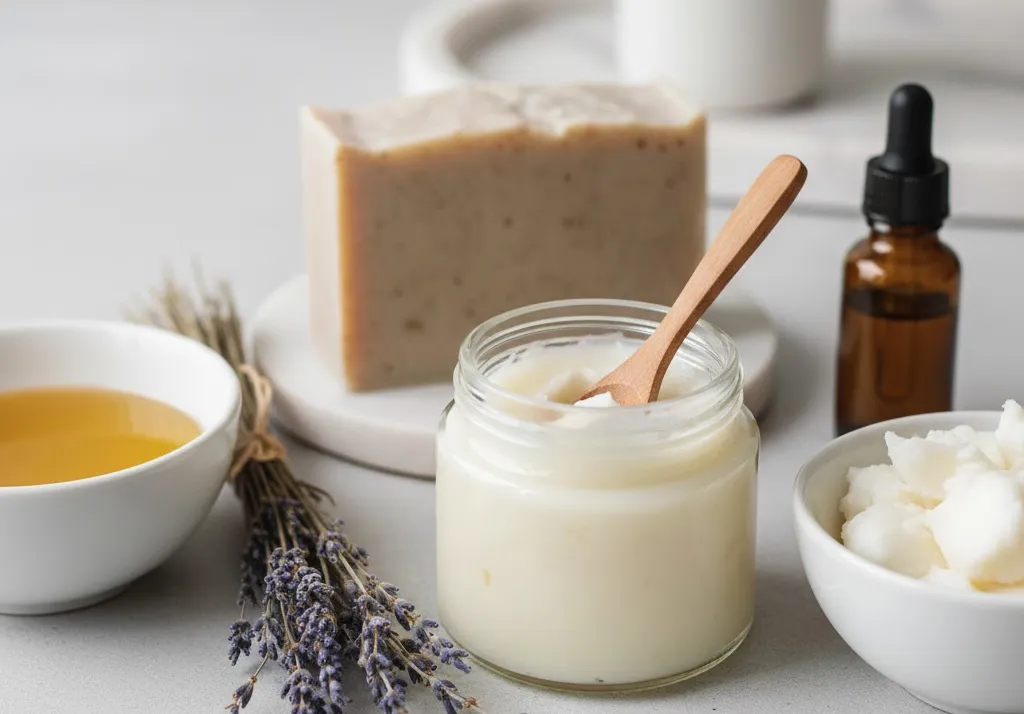
Making a basic tallow balm is approachable for beginners and yields a stable, nutrient‑rich salve ideal for dry patches, lips, and hands. The basic method: gently melt rendered tallow with a hardener like beeswax, add optional liquid carrier oils for texture and extra benefits, then cool into jars. Clean equipment, sensible heat, and proper storage extend shelf life and keep the balm effective. Below is a simple, copy‑friendly balm recipe plus notes for making emulsified creams and tallow soap.
The recipes that follow use simple, natural ingredients—raw honey, beeswax, jojoba or olive oil, and vitamin E—so you can tweak texture and absorption for different uses. If you’d rather skip formulating, handcrafted balms, serums, and toners made with grass‑fed tallow and honey are an easy alternative that deliver consistent results.
This beginner‑friendly balm includes measured steps to help you succeed safely; pay attention to storage and preservative needs if you add water or other perishable components.
- Gather ingredients: 1/2 cup rendered grass‑fed tallow, 2 tablespoons beeswax, 2 tablespoons jojoba or olive oil, 1 teaspoon raw honey, and a few drops vitamin E.
- Gently melt tallow and beeswax in a double boiler over low heat until fully liquid.
- Remove from heat, stir in carrier oil, honey, and vitamin E; whisk briefly to combine evenly.
- Pour into sterilized jars, let cool and solidify at room temperature, then cap and label with the date.
This simple balm will keep for several months in a cool, dry place; refrigeration will extend shelf life. If you plan to add water‑based ingredients or make emulsified creams, follow recommended emulsification temperature ranges and use a proper emulsifier to prevent separation.
How Do You Create Homemade Tallow Face Cream and Soap?
Making a tallow face cream requires emulsification: combine a heated oil phase (tallow and oils) with a heated water phase using a cosmetic emulsifier to yield a stable lotion that absorbs without heavy residue. Heat oil and water phases separately to similar temperatures (around 70–75°C), then blend with the emulsifier while stirring as the mixture cools. For soap, tallow participates in saponification—reacting with lye (sodium hydroxide) to create hard, long‑lasting bars. Follow strict safety protocols with lye, calculate ratios precisely with a lye calculator, and allow soap to cure for several weeks before use.
Both creams and soaps benefit from additions like raw honey (for humectant and mild antimicrobial support) and vitamin E (for antioxidant stability). If you’re unsure about emulsification or lye safety, start with small test batches or use pre‑formulated emulsifying waxes to lower risk and improve consistency.
What Are the Uses and Benefits of Tallow and Honey Balms for Skin Concerns?
Tallow paired with raw honey makes a synergistic balm: tallow replenishes lipids while honey draws moisture and offers mild antimicrobial properties. That combination is useful for sensitive, dry, and inflamed skin. Tallow rebuilds barrier lipids with structural fatty acids and fat‑soluble vitamins, while honey helps retain moisture and support a balanced skin microbiome. Together they can reduce dryness, calm irritation, and create a protective layer that aids healing during flare‑ups. Below is a quick ingredient‑to‑concern mapping for fast reference.
| Ingredient / Product | Skin Concern | Benefit / Mechanism |
|---|---|---|
| Grass-fed tallow | Dryness, barrier dysfunction | Replaces skin lipids; emollient and occlusive support |
| Raw honey | Minor wounds, inflammation | Humectant; mild antimicrobial and anti‑inflammatory action |
| Beeswax | Surface protection | Creates a breathable occlusive layer; stabilizes texture |
| Jojoba oil | Sebum‑like moisturization | Lightweight emollient; non‑greasy absorption |
Use this table to see how each ingredient addresses common skin issues through lipid replacement, moisture retention, or protective occlusion.
Tallow and honey balms are especially handy for localized dryness—elbows, knees, cracked heels, and dry hands—and work well as an intensive overnight facial treatment. For best results, apply to damp skin to lock in moisture, use thin layers on the face to avoid heaviness, and always patch‑test when adding honey or botanicals.
How Does Tallow Help with Sensitive Skin, Eczema, and Dryness?
Tallow supports sensitive and eczema‑prone skin mainly by replenishing the lipid matrix and reducing transepidermal water loss, which can reduce irritation and flare frequency. Its fatty acids restore intercellular lipids while vitamins A and E provide antioxidant and reparative support that may lessen redness over time. For eczema, consistent, gentle barrier support is more helpful than occasional heavy use—short, regular applications help maintain moisture and reduce itch cycles.
Always start with a patch test and use tallow‑based balms sparingly during active flares, applying to damp skin for better absorption. If you’re on topical steroids or other prescription treatments, check with your clinician before adding heavy emollients to your routine.
Can Tallow and Honey Balms Improve Postpartum Skin and Stretch Marks?
Tallow and honey balms provide supportive hydration and lipid replacement that can improve skin comfort and pliability during postpartum recovery, though they shouldn’t be promised as a guaranteed cure for stretch marks. The nourishing fatty acids and humectant honey help maintain moisture, reduce itch, and may improve appearance over time with consistent use. For nursing parents, choose simple formulations—grass‑fed tallow, beeswax, and small amounts of carrier oil—and avoid strong essential oils; patch‑test a small area to ensure infant safety.
Keep expectations realistic: topicals improve surface texture and comfort, but stretch marks involve deeper dermal changes and genetics. Using tallow‑based balms as part of a gentle, daily routine supports recovery and skin comfort after pregnancy.
Seeking anti-aging solutions? Explore our in-depth article here.
How Do You Integrate Grass-Fed Tallow Moisturizer into Your Daily Skincare Routine?
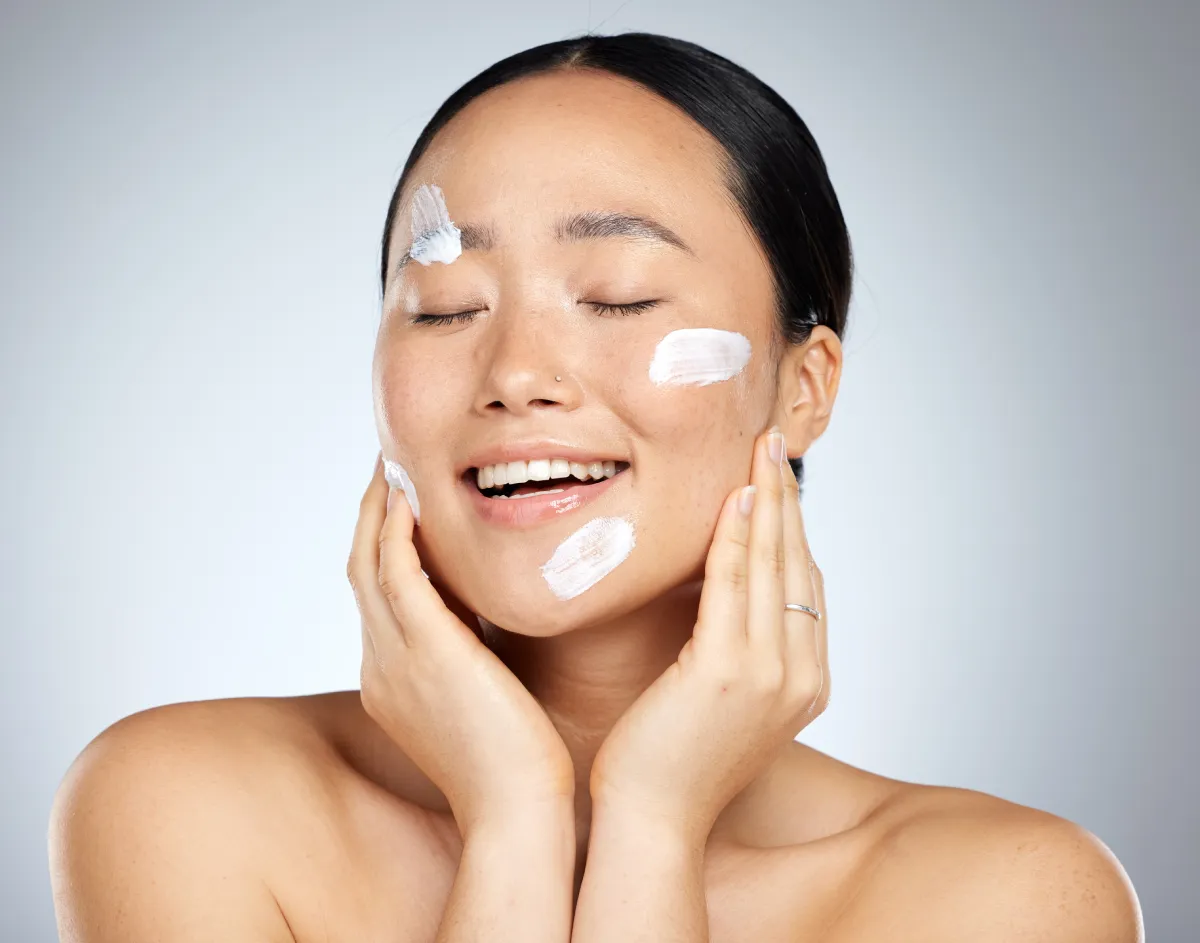
How you add grass‑fed tallow to your routine depends on skin type and texture preference: choose a lighter balm or a thin layer for combination and oily skin, or a richer salve for dry and mature skin. Apply to damp skin to lock in hydration. In the morning, a minimal layer over a lightweight serum or toner offers lasting protection; at night, a thicker application works as an overnight repair. Watch how tallow interacts with actives—it's great over hydrating serums but can slow penetration of acids if applied too soon after exfoliation. Here are practical AM/PM steps.
- AM - Cleanse gently: Use a mild cleanser to remove overnight oils; pat skin damp.
- AM - Hydrate: Apply water‑based serums or toners to restore moisture.
- AM - Seal: Warm a pea‑sized amount of tallow balm between palms and press onto damp areas to lock in hydration.
- PM - Cleanse and treat: After cleansing, use targeted actives if needed and allow them to absorb.
- PM - Repair: Apply a slightly thicker layer of tallow balm to dry areas and leave on overnight for barrier repair.
Think of tallow as your sealing and barrier‑repair step—not a wholesale replacement for every product. If you prefer ready‑made options, handcrafted balms, serums, and toners made with grass‑fed Tallow and Honey offer consistent textures and transparent sourcing for easy daily use. We also have a great range of men’s collections.
What Is the Best Way to Apply Tallow Balm for Maximum Skin Benefits?
Warm a small amount of balm between clean fingers or palms until it softens, then press it onto slightly damp skin to trap water and encourage absorption. Use thin, even layers on the face and thicker layers on hands, feet, or very dry spots; massage gently to help lipids settle and to stimulate circulation. For maintenance, twice daily is common; increase frequency for acute dryness. Always patch‑test and avoid over‑application, which can leave a heavy film or interfere with makeup and sunscreen.
When using tallow in the morning, allow time for absorption before applying sunscreen or makeup to preserve their performance. These simple application steps help you get the most from tallow’s sebum‑mimicking benefits.
How to Choose the Right Tallow and Honey Products for Your Skin Type?
Choose products based on sourcing, ingredient simplicity, and texture preference: look for explicit grass‑fed tallow, short and transparent ingredient lists that prioritize raw honey, beeswax, and gentle carrier oils—especially for sensitive or postpartum skin. Texture matters: balms and salves suit very dry areas, while whipped or serum formats with more carrier oil work better for facial use. Fragrance‑free options reduce irritation risk; if botanicals are included, confirm they’re appropriate for sensitive skin.
- Grass‑fed sourcing stated and transparent
- Short, recognizable ingredient list
- Appropriate texture for intended use (balm vs serum)
- Fragrance‑free or low‑fragrance options for sensitive skin
If you prefer pre‑made products, seek handcrafted collections that emphasize grass‑fed sourcing and simple formulations to simplify selection and support your daily skincare routine.
Why Is Ethical Sourcing and Sustainability Important for Tallow Skincare?
Ethical sourcing and grass‑fed practices matter for nutrient density and environmental impact—pasture‑raised animals often produce tallow with a more favorable fatty‑acid profile and higher levels of certain fat‑soluble nutrients. Sustainable sourcing also ties to supply‑chain transparency, animal welfare, and a reduced reliance on intensive feed systems that can affect ingredient quality. Choosing small‑batch, handcrafted products usually means closer oversight of rendering methods, fewer unnecessary additives, and clearer traceability—factors that build consumer trust and improve product performance.
Knowing the sourcing lifecycle—from pasture to rendering—helps you evaluate claims and pick products that align with your values. Here are practical reasons to prioritize ethical sourcing when choosing tallow skincare.
- Nutrient profile varies with animal diet; grass‑fed often yields higher beneficial fat profiles.
- Handcrafted, small‑batch production limits additives and improves quality control.
- Transparent sourcing increases consumer confidence and allows verification of claims.
What Makes Grass-Fed and Handcrafted Tallow Products Superior?
Grass‑fed, handcrafted tallow products differ from industrial tallow in several meaningful ways: the animal’s diet changes the fatty‑acid profile, gentler rendering preserves fat‑soluble vitamins, and fewer additives mean a purer final product. Small‑batch processing at controlled temperatures helps minimize oxidation and retain skin‑supportive properties. If you want maximum efficacy and sustainability, prioritize products that clearly state grass‑fed sourcing and handcrafted preparation.
A quick sourcing checklist: confirm animal diet (grass‑fed), favor minimal ingredient lists, look for small‑batch or handcrafted claims, and ask about rendering techniques. Those signals often point to better nutrient retention and a more trustworthy product.
How Does Sustainable Ingredient Sourcing Impact Natural Skincare?
Sustainable sourcing affects ecological footprint, ingredient traceability, and long‑term supply stability—each shaping the reliability and ethics of natural skincare. Brands that commit to pasture‑based sourcing and mindful honey procurement support regenerative practices that can improve soil health and biodiversity. From a shopper’s perspective, sourcing transparency reduces greenwashing and enables informed choices based on verifiable practices and values.
Check certifications, supplier transparency, and traceability to distinguish genuine sustainability from marketing. Choosing products built on ethical sourcing supports ingredient quality and helps foster a healthier supply chain for future formulations.
Does Tallow Clog Pores or Cause Acne?
Tallow’s comedogenicity is typically low for most people because its oleic and palmitic acid balance integrates with skin lipids in a sebum‑like way. If you’re acne‑prone, introduce tallow slowly: apply small amounts to targeted areas, avoid heavy occlusion, and patch‑test for 48–72 hours. If breakouts appear, reduce frequency or dilute tallow with lighter carrier oils such as jojoba. Monitoring your skin and adjusting use is the most reliable approach.
Balancing tallow’s barrier benefits with acne risk is personal—what works for one person may not for another—so gradual introduction and observation are recommended.
Tallow Biocompatibility with Skin: A Scoping Review: Tallow, rendered animal fat, and its biocompatibility with skin: a scoping review Tallow, rendered animal fat, and its biocompatibility with skin: a scoping review, 2024
How Does Tallow Compare to Shea Butter and Other Natural Moisturizers?
Tallow differs from plant butters by offering fat‑soluble vitamins and a fatty‑acid profile that more closely resembles human sebum, which can improve compatibility for barrier repair. Shea butter and coconut oil bring useful plant‑derived fatty acids and unique textures—shea is thick and deeply moisturizing, while coconut can be comedogenic for some. Jojoba, a liquid wax, behaves like a lightweight sebum substitute for those avoiding heavy occlusives. Choose based on desired texture, sensitivity, and tolerance.
In short: tallow often excels for intensive barrier repair and very dry skin, while shea or jojoba are good plant‑based options when a vegan ingredient is preferred.
Tallow and DIY skincare offer a practical, barrier‑first approach that combines nutrient‑rich lipids with humectants like honey. If you’d rather skip formulation, handcrafted products made with grass‑fed Tallow and Honey deliver convenience and consistent sourcing. We at Tallow and Honey offer formulated to highlight these benefits for sensitive and dry skin, providing a simple alternative to DIY with reliable small‑batch results.
Conclusion
Tallow skincare offers a natural, nutrient‑dense way to support skin health—especially for dryness, sensitivity, and postpartum concerns. Used consistently, these ingredients can improve hydration, strengthen the barrier, and increase overall comfort. If you prefer convenience, explore our handcrafted Tallow and Honey products for reliable, small‑batch results. Discover how tallow can fit into your daily skincare routine by browsing our collection today.
Curious about the results? Take a look at our before-and-after pictures.