
Beef tallow — the rendered fat from pasture‑raised cattle — is returning to hair care because it soothes and hydrates dry, brittle hair. This guide explains how beef tallow works, the nutrients it brings to scalp and strands, how it compares to other oils, and simple ways to add it to your routine. If your hair needs more moisture and manageability, beef tallow is a practical, nutrient‑rich option to try.
The benefits of tallow include deep hydration, improved elasticity, and scalp nourishment, making it a standout choice for dry hair.
Beef tallow’s return to personal care reflects a broader interest in time‑tested ingredients that pair tradition with modern formulation.
Why Beef Tallow Is Reappearing in Hair and Skin Products
The personal care market has seen renewed interest in beef tallow‑based formulas, driven by demand for natural, traditional ingredients and low‑waste product design.Tallow as a Multifunctional Fat: Composition, Benefits, and Modern Utilization, 2025
How Beef Tallow Hydrates and Nourishes Dry Hair
Beef tallow works on dry hair because its lipids resemble scalp oils, helping it coat the hair shaft and seal in moisture. Fatty acids like palmitic and stearic improve retention and add elasticity. On the scalp, beef tallow can rebuild lipid layers that shampoos or environmental stressors strip away, supporting a balanced, less‑flaky surface. These benefits of tallow contribute to healthier hair and scalp over time.
Laboratory and formulation studies back the idea that beef tallow’s fatty acid mix supports deep moisturizing action.
Which Fatty Acids in Grass‑Fed Beef Tallow Help Hair?
Grass‑fed beef tallow contains several fatty acids that benefit hair. Palmitic acid helps strengthen the cuticle and smooth texture. Stearic acid forms a protective layer that reduces moisture loss. Together these and other lipids work to soften hair and make it easier to manage without masking the hair with heavy residue.
The ability of these fatty acids to reach the hair surface and interact with its structure is central to their moisturizing effect.
How Oils Penetrate Hair
Modeling work looking at membrane and fatty acid ratios (including palmitic and oleic acids) helps explain how certain oils can move into hair layers and improve hydration.Penetration of oils into hair, 2024
How Beef Tallow Helps Rebuild Scalp Lipids and Hydration
Beef tallow can help restore the scalp’s lipid barrier by replacing oils that washing or environmental exposure removes. Because its composition is similar to human sebum, beef tallow can smooth and hydrate the scalp surface, reducing tightness and flaking and creating a healthier base for hair growth. These benefits of tallow make it a valuable ingredient for scalp care.
Advantages of Beef Tallow Versus Other Natural Hair Oils
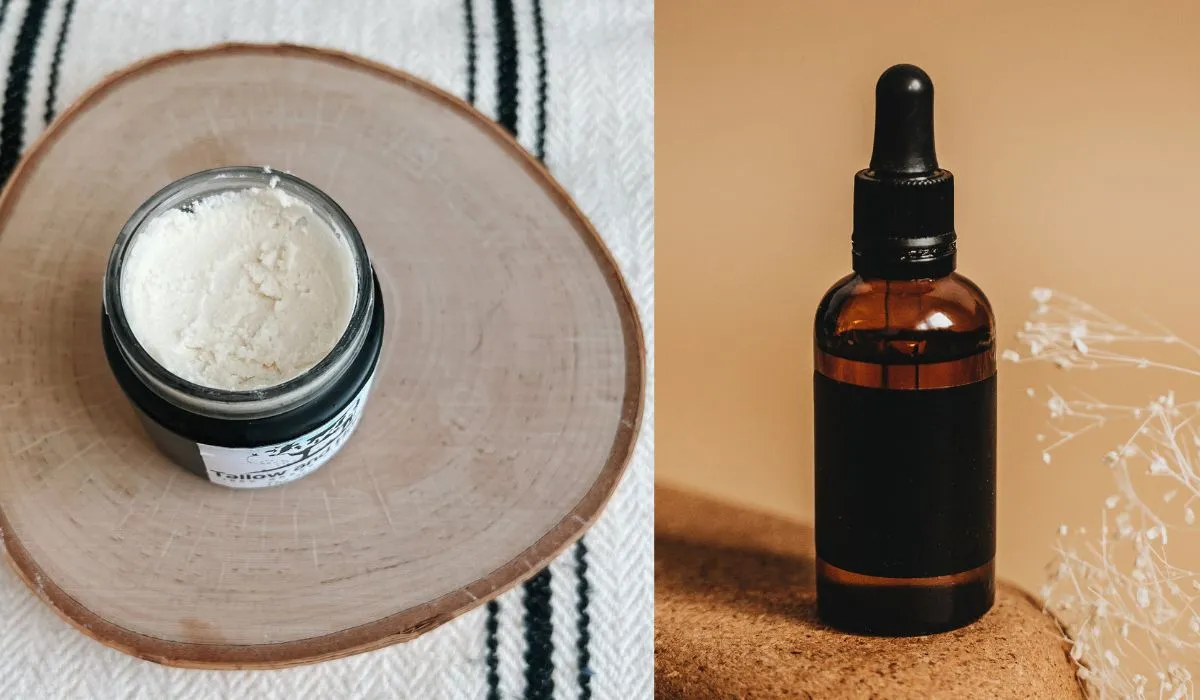
Compared with some heavier oils, beef tallow often absorbs cleanly and can feel less greasy when used correctly. It supplies a mix of fatty acids and fat‑soluble nutrients that support hydration and elasticity. Because grass‑fed beef tallow is usually made from byproducts of meat production, it also supports a lower‑waste approach to ingredient sourcing and a more sustainable lifestyle.
How Beef Tallow Compares to Coconut Oil and Other Animal Fats
Coconut oil is widely used for moisture, but it can sit on the hair and sometimes feel heavy. Beef tallow tends to absorb into the hair and scalp more readily, delivering nourishment without leaving an overly oily finish — making it a good alternative for people who want deep conditioning without that lingering film.
Why Choose Grass‑Fed Beef Tallow?
Grass‑fed beef tallow often contains higher levels of certain fatty acids and nutrients compared with conventionally raised sources. When sourced from pasture‑raised animals, it also aligns with practices that prioritize ethical grazing and reduced food‑system waste, making it both an effective and conscientious choice.
How to Use Beef Tallow in Simple At‑Home Hair Treatments
Adding beef tallow to your routine is straightforward: make masks and scalp treatments at home with a few complementary ingredients to boost nourishment and restore moisture.
Easy DIY Beef Tallow Hair Mask for Dry or Sensitive Scalps
Try this simple, balanced mask:
- Ingredients: 2 tablespoons grass‑fed beef tallow1 tablespoon honey1 tablespoon coconut oil
- Instructions: Gently melt the beef tallow and coconut oil until liquid.Stir in the honey until the mixture is even.Work the mask into damp hair, concentrating on ends and the scalp.Leave for about 30 minutes, then rinse and shampoo as usual.
This combination hydrates strands and soothes the scalp, supporting healthier hair over repeated use.
Best Ways to Apply Beef Tallow to Hair and Scalp
To get the most benefit from beef tallow, try these methods:
- Warm it slightly: A gentle warming improves spreadability and absorption.
- Massage the scalp: Use your fingertips to work beef tallow in — this boosts circulation and helps the product penetrate.
- Overnight treatment: For intense conditioning, apply before bed and wash out in the morning.
Those approaches help beef tallow coat the hair shaft and restore hydration where it’s needed.
Possible Side Effects and Precautions
Beef tallow is generally well tolerated, but some people with sensitive skin or specific allergies may experience irritation or breakouts. Always do a small patch test before applying over large areas, and check with a healthcare provider if you have concerns about allergies or skin conditions.
If you’d like to shop, explore our full product range.
Looking for a Complete Tallow Hair Treatment?
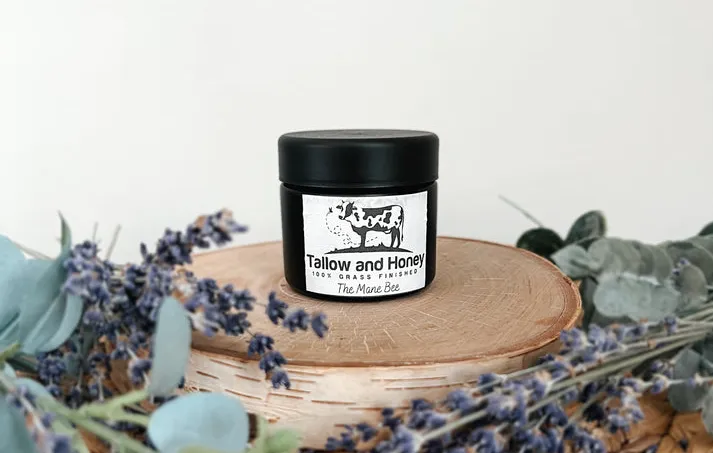
If you prefer a ready-to-use solution instead of DIY blends, The Mane Bee by Tallow and Honey is a traditional Ayurvedic-inspired treatment crafted to nourish both scalp and strands in one simple step.
Made with 100% grass-finished tallow, golden jojoba oil, camel milk, apple seed oil, carrot seed oil, amla, neem oil, rosemary, silk protein, amino acids, blue lotus, and peppermint oil, this formula blends ancestral ingredients with modern hair-supporting nutrients for balanced hydration and long-term scalp health.
What Other Tallow and Honey Product Is Suitable for Dry Hair?
For lightweight daily hydration and shine, Bee Silky Hair Serum is a perfect companion to The Mane Bee. This fast-absorbing serum blends grass-fed tallow with nourishing oils to smooth frizz, protect strands from environmental stress, and leave hair soft and manageable without heaviness. Ideal for dry or brittle hair, it can be used on damp or dry hair as a finishing touch or daily moisturizer.
Frequently Asked Questions
Can beef tallow be used on all hair types?
Yes — beef tallow can benefit straight, wavy, curly and coily hair by adding moisture and improving manageability. If your hair is very fine or tends to be oily, use less product and test a small amount first to avoid heaviness.
How often should I use beef tallow for hair care?
Frequency depends on your hair’s needs. For dry or damaged hair, once a week is a good starting point. If your hair is only mildly dry, every one to two weeks may be enough. Adjust based on how your hair responds.
Is beef tallow suitable for sensitive scalps?
Because beef tallow’s lipids are similar to sebum, many people with sensitive scalps find it soothing. Still, do a patch test and stop use if irritation occurs. When in doubt, consult a dermatologist for personalized advice.
Can I mix beef tallow with other oils for hair care?
Absolutely. Beef tallow blends well with oils like jojoba or argan to create a tailored treatment. Choose oils that match your hair goals — for example, lighter carriers for fine hair, richer oils for thicker or very dry hair.
How should I store beef tallow for hair care?
Keep beef tallow in a cool, dark place in an airtight container. In warm climates, refrigeration extends shelf life. Discard if it develops an off smell or strange texture.
Are there any specific brands of beef tallow recommended for hair care?
Look for brands that specify 100% grass‑fed beef tallow and list no unnecessary additives. Brands with transparent sourcing and strong customer reviews are a reliable place to start when choosing a product.
Conclusion
Grass‑fed beef tallow is a simple, effective way to add lasting moisture and improve hair texture, especially for dry or brittle hair. It nourishes strands and the scalp, restoring balance without complex routines. Try a beef tallow treatment to see if your hair becomes softer, shinier, and easier to manage. Explore our premium beef tallow options to find the product that fits your needs and experience the many benefits of tallow for your hair care regimen.
For those interested in exploring more ways to use tallow in personal care, check out our guide on Tallow for Natural Nail Care and Strong Nails. Just like it nourishes hair and scalp, grass-fed tallow can help strengthen nails, support cuticle health, and maintain hydration for naturally healthy-looking hands.